NP vs. Physician Standard of Care: Choosing Your Expert
When an NP's care is at issue, who evaluates it matters.
By Sandy Harman, DNP, AGACNP-BC, ENP-BC, FNP-BC, LNC
When a nurse practitioner's care is at the center of a medical malpractice or personal injury claim, one of the earliest strategic decisions counsel makes is who will evaluate that care. It is tempting to treat "medical expert" as a single category. In practice, the question of whether an NP was measured against the right standard, by the right professional, can shape the strength of an expert report, the course of depositions, and the credibility of opinions at trial. This applies equally to plaintiff and defense counsel.
Why the NP standard of care is its own question
Nurse practitioners are advanced practice registered nurses. They are educated, certified and licensed through nursing, and they practice within a defined population focus such as emergency, adult-gerontology acute care, or family practice. Their scope of practice is set by state law and, in many states, shaped by collaborative or delegation agreements with physicians, facility policies, and credentialing and privileging decisions.
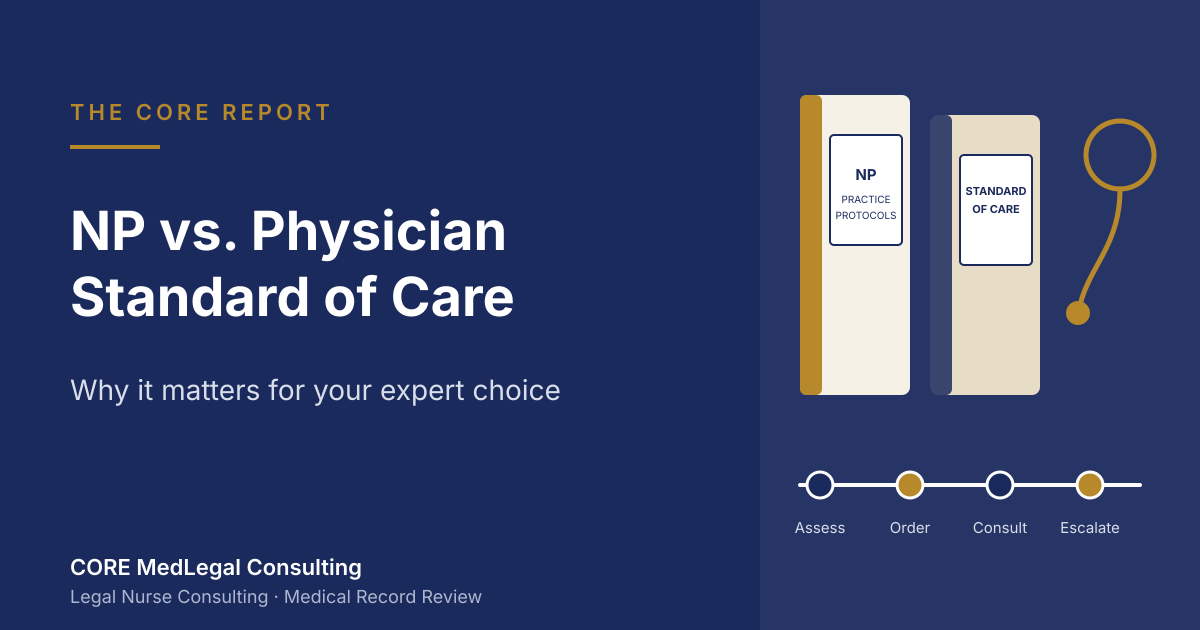
The standard of care for an NP is generally framed as what a reasonably prudent nurse practitioner, with similar training and in similar circumstances, would have done. That framing matters. It asks how an NP in that role, in that setting, with that patient presentation, should have assessed, documented, ordered, interpreted, treated, consulted, and escalated. It is not automatically the same question as how a board-certified emergency physician or internist would have managed the same case.
Where the analysis tends to diverge
NP and physician care overlap substantially, and in many settings they look nearly identical in the chart. The differences that matter in litigation are usually found in the details:
- Scope and delegation. What did the practice agreement, protocols, or facility bylaws permit the NP to do independently, and when was physician consultation expected?
- Role in the encounter. Was the NP the primary decision-maker, working alongside a physician, or seeing a patient a physician later co-signed or evaluated?
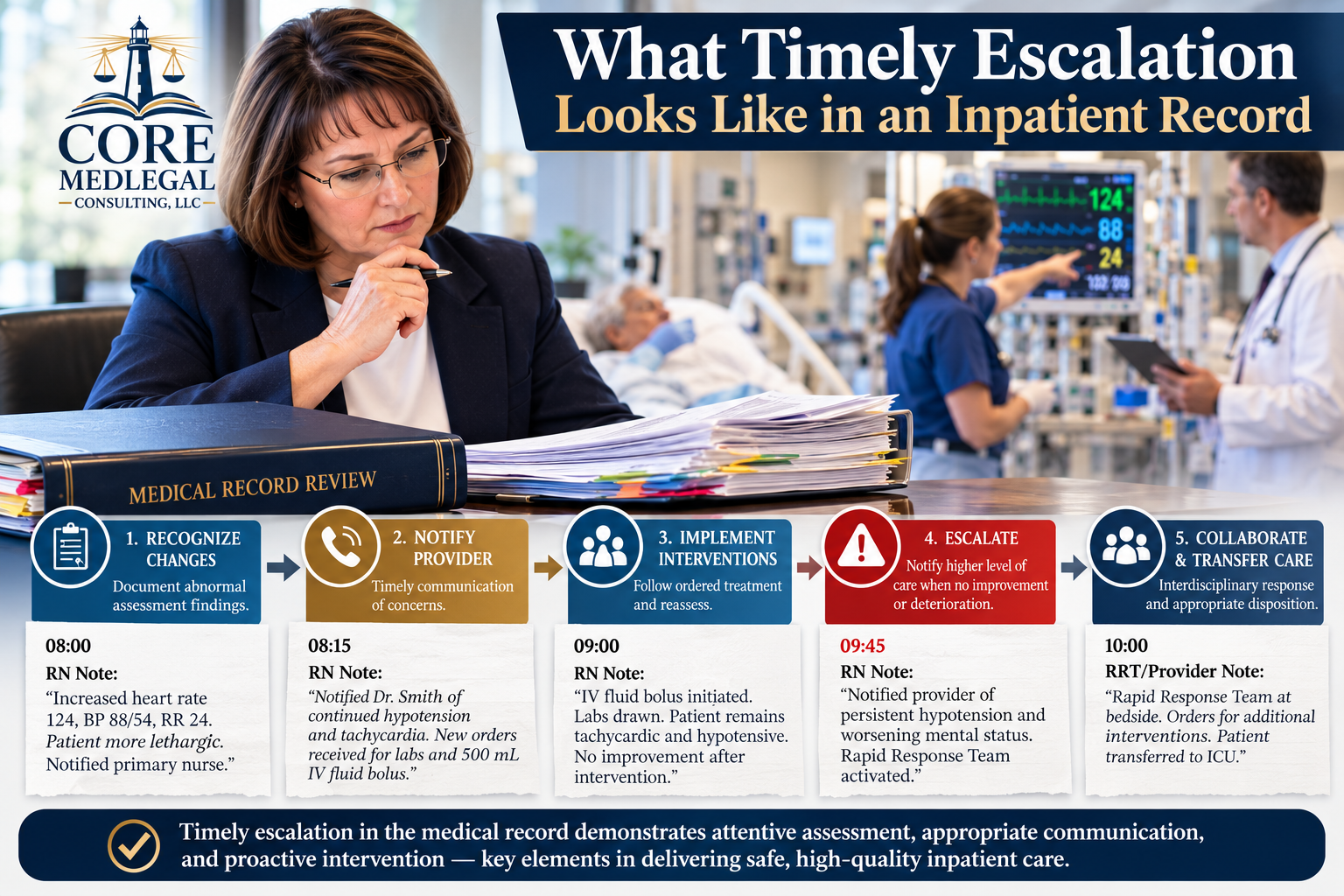
- Escalation and consultation. Did the record reflect consultation at the points where the NP's role, protocols, or the clinical picture called for it? Was the response documented?
- Population focus. An emergency NP, an acute care NP, and a family NP are trained for different patient populations and settings. The relevant comparison is to an NP practicing in the same role.
- Systems factors. Staffing, supervision structures, and handoff processes can bear on what a reasonable NP could have done, and on where responsibility sits.
An expert who understands these layers from the inside is better positioned to separate an individual practitioner's decisions from protocol, supervision, or system issues. That distinction often matters to both sides.
What this means for expert selection
Expert qualification rules vary by jurisdiction, and the qualification of an expert is ultimately a legal question for counsel and the court. In Texas, for example, Chapter 74 of the Civil Practice and Remedies Code sets out expert report requirements for health care liability claims and addresses expert qualifications separately for claims involving physicians and other health care providers. Causation opinions in that context are generally expected to come from a physician. Counsel should confirm the specific requirements that apply in their jurisdiction and case.
From a clinical perspective, several practical considerations tend to come up:
Credibility on the standard. An NP expert who practices in the same population focus can speak directly to what NPs in that role are trained to do, what their protocols typically require, and how they document and escalate. That firsthand perspective can be difficult for opposing counsel to characterize as an outsider's view.
Avoiding a mismatched yardstick. When an NP's care is evaluated only through a physician lens, the analysis may hold the NP to a standard outside their role, or may miss NP-specific expectations around consultation and protocol. Either can create vulnerabilities on cross-examination.
Complementary experts. In many cases, an NP standard-of-care expert and a physician causation expert work together. Each addresses the questions within their own training, and the opinions are stronger for it.
Multiple providers. When an NP and a physician both treated the patient, it is often useful to have the NP's care and the physician's care evaluated separately, so that each practitioner is measured against the appropriate standard.
What a focused NP standard-of-care review looks like
A careful review starts with the full record, not just the encounter in question. That typically includes triage and nursing notes, provider notes, orders and results with timestamps, medication administration records, consult requests, and discharge or transfer documentation. Where available, practice agreements, protocols, and relevant policies help define what was expected of the NP in that setting.
From there, the analysis identifies each decision point, compares what the record shows with what a reasonably prudent NP in that role would have done, and documents where the care met the standard, where it may have fallen short, and where the record is simply silent. The goal is an objective opinion that holds up regardless of which side retained the reviewer.
Practical takeaways for attorneys
- Identify early whether an NP was the primary decision-maker for the encounters at issue.
- Request practice agreements, protocols, and relevant facility policies along with the medical record.
- Match the expert to the NP's population focus: emergency, acute care, or family practice.
- Consider whether separate experts are needed for NP standard of care and physician causation.
- Confirm your jurisdiction's expert qualification and report requirements before designating experts.
- Ask any expert how they distinguish individual practice decisions from system and supervision issues.
Talk through your case
If you are evaluating a case that involves care by a nurse practitioner, I am glad to discuss how the standard of care may apply and what type of review would be most useful. I work with both plaintiff and defense counsel, and every review is objective and grounded in the record. Schedule a complimentary consultation through the Contact page or call (972) 833-6275.